Yoga Every Day at Home - a four week course for carers in association with Disability Bradford.
Week 3: Breathing
Who needs to learn more about breathing?
We all know how to breathe, right? We’ve been doing it since the day we were born after all.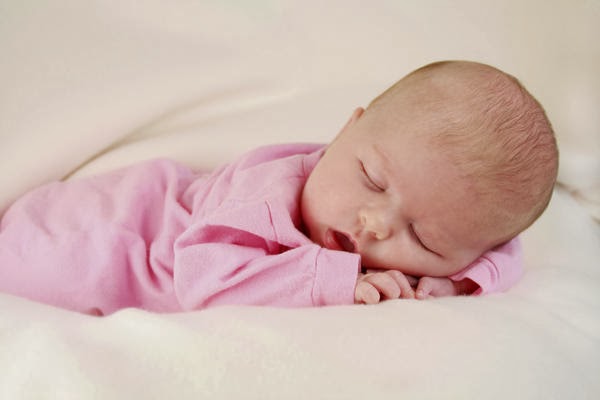
Whilst it is true that breathing is an automatic action that our body accomplishes without us giving it a second thought, still many of us develop bad breathing habits...


 Poor general posture, repeatedly collapsing the chest and poking the chin forwards in desk work, driving or whilst sat on the sofa, holding the breath, breathing through the mouth, breathing in a shallow way...


Recognise any of those? As stated in a previous blog post on breathing, which you can read about here, there is a large proportion of people who have fallen into a pattern of not using the diaphragm and other muscles of breathing around the ribs, chest and throat efficiently
and in a balanced way. The previous post
suggests a few tests you can do to see whether you’ve picked up any sub-optimal breathing habits, and offers insights into how so many of us fall into bad breathing habits. I won’t repeat here what
I already wrote, suffice to say, most of us will feel a greater sense of
freedom around the throat, ribs and chest by doing the simple exercises in this
post regularly.
Undoing those bad breathing habits
The
following pair of exercises really get into places that other exercises don’t
reach and re-balance the muscles of breathing, open the chest and throat and instil
a sense of emotional balance, calm and peaceful vitality. They don’t need to be done as part of any
routine so it is really easy to fit them into your day. Start with 5 or so rounds of each, performing
the exercises slowly and carefully. Keep
your inhalations and exhalations smooth and even. With the help of some fabulous yoga friends, I’ve made some video clips to accompany the written instructions to give you greater clarity and confidence in performing them.
Dru Yoga’s Pigeon Breath
The pigeon breath is a great foundation breathing
exercise. It can help release spasming and tension from the diaphragm and
strengthen and re-balance the muscles of breathing. It is particularly beneficial
for asthma sufferers. I find that it also gives a sense of calm and well-being.
It is a simple exercise which you can fit easily into your day. I have included written instructions, but for clarity please watch the short clip of the exercise being superbly demonstrated by fellow Dru yogini, the lovely Leanne:
It is a simple exercise which you can fit easily into your day. I have included written instructions, but for clarity please watch the short clip of the exercise being superbly demonstrated by fellow Dru yogini, the lovely Leanne:
There are 4 parts to the movement. All breathing is through the nose, APART from
the ‘pigeon coo’ in part 2.
1 Sit in neutral spine, or stand in Tadasana
(Mountain Pose). Interlock
your hands under your chin. Your head faces forward. Breathe in through
your nose and raise the elbows sideways to expand the ribs and chest. (Pigeon wings). This works
the intercostal muscles and opens the rib cage.
2 Breathe out through your mouth, slowly, steadily and evenly, as if blowing out through a straw. (Pigeon coo). At the same time, bring your elbows together in front of you as you gently push your chin up. (Do not force your head back). This phase controls the upward movement of the diaphragm.
3 Hold this position as you breathe in through the nose, the head slightly tilted up, feeling the chest inflate. (Pigeon chest). The expansion of the sternum and upper chest is the focus here.
4 Breathe out through the nose, returning your head and elbows to the starting position.
Begin with 5 repetitions and build up to around 5 minutes over time.
Dru Yoga's Windmill breath
Dru Yoga's Windmill breath
This is a
technique to open the chest and improve control of the muscles of respiration,
easing restrictions and facilitating the breathing process. The arms go around
like the sails of a windmill. It is a
great exercise if you feel tight around the chest and shoulders. It will also gently mobilise the thoracic spine.
The written instructions make it sound complicated, but if you view the video clip by following the link below, you can view the fabulous Peter, another Dru yoga teacher, give an excellent demonstration.
The written instructions make it sound complicated, but if you view the video clip by following the link below, you can view the fabulous Peter, another Dru yoga teacher, give an excellent demonstration.
2 Inhale and raise the right arm behind you, turning the trunk to the right and allowing the right arm to raise until upper arm is level with the ear and fingertips are reaching towards ceiling, and trunk turns to face the front again. Do this movement in a single inhalation.
3 Pause momentarily with your right arm above your head.
4 Begin to breathe out, lowering the right arm in front AND AT THE SAME TIME, the left arm rises backwards and upwards and your turn you trunk to the left this time. Continue to lift the left arm behind you and up to the ceiling, turning the trunk back to the front. At the same time the right arm lowers down in front to your side. Again, complete the set of movements in this paragraph in a single exhalation.
5 After the initial raising of the single right arm to the ceiling, the arms work opposite each other, so when one is directed to the ceiling the other reaches for the floor. When one is lowering from the ceiling to the floor in front, the other is lifting from the floor to the ceiling behind. Whenever an arm is raising behind the body, the trunk turns back towards that arm.
You have now opened your right lung. To even up, you need to repeat the exercise on the left side. Follow the instructions again, but initiate replace right with left and left with right!
It seems more complicated than it is in written form, but as you watch the clip and try for yourself the movements will become obvious.
Taking it further
If you feel ready for more, download the following free podcast of breathing exercises. Mary Sammon of the Sangha Yoga Center begins the recording with a superb explanation of the significance of breath in yoga. This takes about 10 minutes (which you can of course fast-forward on subsequent uses). She then leads the listener through 3 breathing exercises; (1-deep yogic breathing, 2-ujayii breathing (with sound) and 3-alternate nostril breathing). Follow the link below and choose 'pranayama'.
Mary Sammon, Sangha Yoga Centre. Free breathing exercises podcastAnd finally...
It is important to say that in yoga, breathing is a science called pranayama, and breath is prana, or life force. Ancient yogis measured human life not by years, but by the number of breaths. The wisdom is that if you learn to extend the breath, you learn to expand your life force, vitality and longevity.
"When
the breath wanders the mind also is unsteady. But when the breath is
calmed the mind too will be still, and the yogi achieves long life.
Therefore, one should learn to control the breath".
Svatmarama, Hatha Yoga Pradipika


